



"I am a physician... I was evaluated and felt to be a good candidate for LASIK surgery... I am now being evaluated for corneal transplant in both eyes... I believe LASIK should be withdrawn." Report filed with FDA.
"The biggest regret of my life is not finding your site before having this horrible procedure done." Email from a physician.
"Who in their right mind would want to undergo LASIK after viewing these photos?" Email from an eye doctor.
July 2022
fda takes action
to warn lasik patients
In July, 2022, the FDA issued draft guidance for LASIK lasers with 25 pages of new warnings for prospective LASIK patients.
Read new LASIK warnings here
Read FDA press release here
lasik warning
Heed the warnings of an eye doctor and several LASIK patients with life-altering complications.. Avoid LASIK!
April 2018 Lasik-Suicide Protest

April, 2018: Protest at meeting of the American Society of Cataract & Refractive Surgery (ASCRS) in Washington DC. Injured patient-protesters were met with sneers and verbal attacks from LASIK surgeons. Learn about LASIK-related suicides here.
Update 11/23/2019: Tragically, we have recently learned of several more laser eye surgery-related sucides. Today the suicide count stands at 28 (many more suspected).
Nov. 21, 2019 cTV news
Lasik MD patients allege nerve damage, file class action lawsuit. From the article: At least two Canadians are suing a national chain of laser eye surgery clinics and asking others to join them after they developed a rare and extremely painful complication. Christopher Ouellet and Krystel Terzian were supposed to see better following the popular elective procedure, but they allege the cornea operation performed at Lasik MD clinics instead triggered unrelenting eye pain. Ouellet is the lead plaintiff in the new first-of-its-kind class action lawsuit. Read article
Nov. 14, 2019 cbs news
LASIK eye surgery should be taken off market, says whistleblower. From the article: Abraham Rutner said LASIK surgery damaged his vision and nearly ruined his life. "It's a devastation that I can't even explain," Rutner told CBS News medical contributor Dr. Tara Narula... [Edward] Boshnick estimates he's treated thousands of patients with LASIK complications... "Essentially we ignored the data on vision distortions that persisted for years," said Morris Waxler, a retired FDA adviser who voted to approve LASIK. He now says that vote was a mistake. Read article
JULy 1, 2019
Wall Street Journal
When Routine Eye Surgery Leads to Debilitating Pain. By Betsy McKay. From the article: Kaylee Patterson woke with a sharp pain in her right eye the morning after she had Lasik surgery... Worried, Ms. Patterson visited her surgeon and her regular eye doctor several times over the next few weeks. They repeatedly told her that everything looked normal, she says. Yet the slightest thing—a draft of air, a ray of light—would cause excruciating pain in her head. “I was in pain and nobody was helping me,” the 33-year-old mental-health counselor said. A year and a half after her surgery, Ms. Patterson finally learned why she was suffering. She has a condition known as neuropathic corneal pain, a specialist told her. Read article Learn more about pain after LASIK
JUNE 11, 2018
NEW YORK TIMES
Blurred Vision, Burning Eyes: This Is a Lasik Success? By Roni Caryn Rabin. From the article: Even now, serious questions remain about both the short- and long-term risks and the complications of this increasingly common procedure. Nearly half of all people who had healthy eyes before Lasik developed visual aberrations for the first time after the procedure, the trial found. Nearly one-third developed dry eyes, a complication that can cause serious discomfort, for the first time. The authors wrote that “patients undergoing Lasik surgery should be adequately counseled about the possibility of developing new visual symptoms after surgery before undergoing this elective procedure.” Read article
EXPLOSIVE LASIK DOCUMENTARY
Watch Dutch filmmakers expose hidden risks of LASIK (with English subtitles).
OUT OF THE MOUTHS OF
LASIK SURGEONS
LASIK surgeons say the darndest things when they think the public isn't listening... At the 2016 World Ophthalmology Congress, leading Lasik surgeon, Peter McDonnell, MD, is quoted admitting that Lasik creates a neurotrophic cornea, which they don't know how to prevent or treat. Wouldn't that require that they stop doing Lasik? Afterall, they are bound by the Hippocratic oath to "Do no harm".
Quote: "A third hot topic within refractive surgery is the neurotrophic cornea, Dr. McDonnell said. However, there is much that remains to be done. “Our limited knowledge translates into a limited ability to prevent and treat this,” he said." Source
NEWS
A press release issued by Avedro, a company that sells a drug-device treatment for post-Lasik ectasia, states, "The incidence of corneal ectasia following refractive surgery [Lasik] is estimated to affect approximately 160,000 patients in the United States, qualifying it as an orphan disease." Link to press release
Laser Eye Surgery and Chronic Pain, by Bryn Nelson on Mosaic Science. Link to article
EXPLOSIVE ARTICLE in October, 2015 issue of Consumers Digest by reporter Catherine Elton. Three former FDA officials are now speaking out against Lasik. Excerpt: "Waxler and Beers say the clinical trials that were used to apply for FDA approval of Lasik devices had flaws that call into question whether the procedure should have been approved from the beginning."
IMPORTANT MESSAGE
FOR THE AAO AND ASCRS
In a 2010 televised debate with Dr. Morris Waxler, LASIK surgeon, Dr. Stephen Slade said, “The patients that have had problems with older forms of LASIK, or even other forms of refractive surgery, again, are our focus, and we will do everything for them that we possibly can.”
Refractive surgeons ‘should’ take ownership of the problems they create.
LASIK patient advocates ask the American Academy of Ophthalmology (AAO) and the American Society of Cataract and Refractive Surgery (ASCRS) to earmark foundation funds to assist post-refractive surgery patients who have experienced poor outcomes with the burdensome costs of rehabilitation, including rigid contact lenses, corrective procedures, dry eye treatments, and other costly therapies.
LATEST FDA LASIK STUDY
FINDS HIGH RATE OF PROBLEMS
Results of the long-awaited LASIK Quality of Life Study have been published on the FDA website. On October 19, 2014, FDA official, Malvina Eydelman, M.D., summarized the study findings saying, "Given the large number of patients undergoing LASIK annually, dissatisfaction and disabling symptoms may occur in a significant number of patients."
• Up to 46% of subjects who were symptom-free before LASIK reported visual symptoms (halos, starbursts, glare, and ghosting) after LASIK.
• Up to 28% of subjects with no symptoms of dry eyes before LASIK developed dry eye symptoms after LASIK.
• Nearly 5% of subjects were dissatisfied with their vision after Lasik.
Read more on LasikNewsWire. Important message for PROWL study participants.
Survey of physicians who've had laser eye surgery
confirms high rates of adverse effects
Pasquali et al performed a survey of physicians who underwent laser eye surgery from 2000 to 2012, which was published in the Journal of Cataract and Refractive Surgery (JCRS). In a colossal failed attempt to spin the survey results in favor of LASIK, JCRS editor Nick Mamalis, MD revealed the following high rates of post-surgical adverse effects reported by physician-respondents: "eyes feeling irritated (50%), glare (43%), halos (41%), and [trouble] seeing in dim light (35.2%)."Source: Mamalis N. Laser vision correction among physicians: "the proof of the pudding is in the eating". J Cataract Refract Surg. 2014 Mar;40(3):343-4.
In the editorial, Mamalis refers to the LASIK industry's hastily thrown together LASIK WORLD LITERATURE REVIEW, calling it "an exhaustive review". In their haste to counter negative press surrounding a 2008 FDA hearing on LASIK problems, perhaps the authors forgot to mention that the articles retained in the literature review confirm double-digit rates of persistent dry eyes and night vision problems after LASIK.
OTHER NEWS
LASIK: A Fight FDA Can’t Ethically Win written by FDA watchdog/blogger.
Harvard Professor Blasts CDRH for Failure to Protect LASIK Patients
LASIK consumer advocates file citizen petition with FDA seeking black box warning on excimer lasers. Read story
Read the study of 21 patients who developed agonizing, unrelenting eye pain after LASIK that the AMERICAN ACADEMY OF OPHTHALMOGY apparently didn’t want you to read. Read study
Olympic Bobsled Medalist Steve Holcomb Suicide Attempt
Although LASIK is not mentioned in this video, Holcomb's vision problems started after LASIK surgery, according to Holcomb's book. LASIK surgeons routinely misdiagnose post-LASIK ectasia as "keratoconus" in an effort to keep a lid on this growing epidemic. (Note: The corrective procedures that Holcomb underwent were not FDA-approved for post-LASIK eyes). Excerpt from Holcomb's book: "I had worn contacts and glasses for years and thought nothing of it... A local eye surgeon came to the U.S. Olympic Training Center in Lake Placid and offered free Lasik procedures... After a quick screening it was determined that I would be a great candidate, and so I took advantage of it... That had been a year ago, and not only was I not seeing better, but my vision kept getting worse." Update: Holcomb was found dead at the age of 37 in his room at the U.S. Olympic Training Center in Lake Placid, New York, on May 6, 2017.
3/20/2012 - FDA letter to ASCRS: LASIK ads which fail to disclose risks are illegal
Excerpt: "... the FDA‑approved labeling for every laser approved for LASIK includes the risks of dry eye syndrome, which can be severe; the possible need for glasses or contact lenses after surgery; visual symptoms including halos, glare, starbursts, and double vision, which can be debilitating; and the loss of vision. FDA recommends the inclusion of this risk information in all advertising and promotional materials for FDA‑approved lasers used for LASIK."
Read FDA Letter to ASCRS 3/20/2012.
If you become aware of an advertisement, promotional material, or Internet promotion for LASIK that fails to disclose risks, contraindications, warnings, and precautions, please forward it to the FDA. We have designed a template that you may modify to file your complaint. False ad template.
How YOU can help
Leave your comments and sign the petition to stop LASIK. Read what over 1,500 current signers have to say.
If you are an injured LASIK patient, you should file a MedWatch report with the FDA. Read a sample of LASIK injuries on file with the FDA.
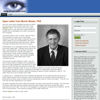 Dr. Morris Waxler, former FDA chief research scientist, has re-examined the science behind FDA-approval of LASIK, and now believes LASIK should be discontinued. He asks that you join him to stop LASIK at HelpStopLasik.com
You can help spread the word about problems of LASIK. Add a link to this website on your website or blog, or post a link anywhere LASIK is discussed on the Internet.
LASIK Flaps Never Heal...
/flap_edge(100).jpg) "There is a high risk of potential traumatic flap problems after LASIK and it is not recommended in army service". (Xiao et al, 2012)
"There is a high risk of potential traumatic flap problems after LASIK and it is not recommended in army service". (Xiao et al, 2012)
"Laser in situ keratomileusis is another surgery in which the flap is prone to traumatic dislocation because the interface does not seem to heal except at the edges." (Canto et al, 2011)
"Although LASIK remains the most popular refractive surgical procedure, it is becoming apparent that corneal surfaces, cut to create the midstromal flap during surgery, fail to fully reunite postoperatively; surgeons can simply peel back an anterior corneal flap several years later. Such patients... are at risk for progressive visual disability due to general corneal weakness that may progress to ectasia or even traumatic displacement of the insecure flap." (Mi et al, 2011)
See proof that LASIK flaps never heal»
Other articles of interest
3/30/2013 - Interest in LASIK waning since 2008. Read abstract
3/23/2013 - German researchers find 28.3% of LASIK patients studied do not have vision suitable for driving a vehicle based upon German standards for mesopic vision and glare. Read abstract
2/4/2013 - Global News 16x9 reports Daniel Mouflier's LASIK hell.
1/26/2013 - Joe Tye, Update on LASIK warning
12/18/2012 - FDA warns against improper advertising, promotion of lasers intended for LASIK corrective eye surgery Read press release. According to the press release, the LASIK providers that received FDA Warning Letters are:
•20/20 Institute Indianapolis LASIK, of Indianapolis
•Scott Hyver Visioncare Inc., of Daly City, Calif.
•Rand Eye Institute, of Deerfield Beach, Fla.
•Eye Center of Texas, of Bellaire, Texas
•Woolfson Eye Institute, of Atlanta
12/12/2012 - New case report: Flap dislocation 10 years after "uneventful" LASIK. Read article
11/30/2012 - Dr. Nicholas Caro charged with embezzlement and mail fraud.
11/15/2012 - Long-term study demonstrates ~6 in 1,000 eyes develop post-LASIK ectasia. Link to abstract
7/25/2012 - FDA 'Has Moral Obligation' to Intervene in Suicide
6/5/2012 - Herbert J. Nevyas, M.D., Nevyas Eye Associates slapped with FDA warning letter for failure to report serious LASIK injuries. Read letter
5/15/2012 - Researchers say LASIK flap is "permanent", "non-attached", and "a liability". Source
4/7/2012 - Retrospective study finds LASIK is not safe for military personnel.
3/9/2012 - LASIK founder files new drug application with FDA for treatment of LASIK-injury
3/5/2012 - LasikComplications.com featured in The China Post.
2/24/12 - In an update on a LASIK malpractice lawsuit, attorney Todd Krouner reported that LASIK surgeon, Mark Lobanoff, M.D., sought to discharge and replace defense expert George Waring, M.D., as “incompetent,” as a result of “issues with his memory.” Plaintiff opposed the motion, noting that Dr. Waring continues to treat patients, and no medical affidavit was offered to support Dr. Lobanoff’s claim that his own expert was incompetent. Instead, plaintiff argued that defendants sought to fire Dr. Waring because of his unsuitable history as an expert, including his consensual settlement in a hyperopic ectasia malpractice lawsuit filed against him; suspension of privileges from Emory University Eye Center for implanting a surgical device without the patient’s consent; and a criminal conviction for assaulting a flight attendant. Source
2/15/2012 - LASIK pioneer drops "bombshell" against LASIK, will no longer perform the procedure because it violates his medical ethics. Read article
1/16/2012 - Morris Waxler, former FDA chief of ophthalmic devices, reported the LASIK-related suicide of 28 year-old Vincent Wat of Las Vegas to the FDA commissioner, Margaret Hamburg, M.D., and the director of the FDA's Center for Devices and Radiological Health, Jeffrey Shuren, M.D., J.D. Read Dr. Waxler's letter. Read more about LASIK and suicide.
Shocking videos
Renowned LASIK surgeons performing comedy skits mocking damaged LASIK patients who are depressed or suicical. Watch Parag Majmudar, M.D.'s performance as "Dr. I. M. Suicidal" at a convention of the American Society of Cataract and Refractive Surgery (ASCRS), singing of "pushing the boundaries of ethics".
Below, skip to 42 seconds to watch comedy skit starring Dr. I. M. Suicial (Parag Majmudar, M.D.), William Trattler, M.D. and Jodi Luchs, M.D.
Before You Let Them Cut on Your Eyes
Watch Joe Tye's LASIK video series: The Campaign to Outlaw LASIK, Yellow VWs and LASIK Injuries, What "Perfect Candidate" Really Means, The Economics of Lasik Surgery, Lasik Injury and Lost Productivity, The Truth About Lasik Enhancements, The Complication They Won't Tell You About , Lasik Dry Eye Disease, The Lasik Industry Code of Silence, Integrity Check for Lasik Surgeons.
GlobalTV 5/28/2011
Investigators go undercover to expose lies that LASIK clinic employees and doctors tell prospective patients. Former FDA chief, turned whistleblower, exposes corruption surrounding FDA-approval of LASIK devices. Young mother who suffers from painful, chronic dry eyes after LASIK tells her story. Son of a police officer who could not bear to live with the complications of LASIK tells his father's story.
MSNBC 2/18/2011
Former FDA official pushes for end to LASIK surgery.
12/16/2010
News Channel 7 WSPA
TLC accused of performing LASIK on bad candidates. Class action and medical malpractice lawsuits name TLC Laser Centers. Watch video:
April 2008
FDA Hearing on LASIK
In response to public outcry of widespread problems with LASIK, the FDA held a public meeting on April 25, 2008 to hear from a panel of experts and patients harmed by the surgery. Watch presentations:


